Vladimir Peniakoff, the man they called Popski
A Belgian-born engineer of Russian parents, Peniakoff spent fifteen years working in the Egyptian sugar industry and exploring the desert before the war. He talked his way into the British Army at 42, raised the smallest independent unit it had, and lost a hand leading it.
Who was Popski?
Vladimir Peniakoff was born in Huy, Belgium, in 1897. He studied in Brussels and Cambridge, served as a gunner in the French army in the First World War, and moved to Egypt in 1924. Commissioned in the British Army in 1940, he commanded the Libyan Arab Force Commando and then Popski's Private Army until 1945, winning the Military Cross and the Distinguished Service Order. He wrote a best-selling memoir, Private Army, and died in London in 1951, aged 54.
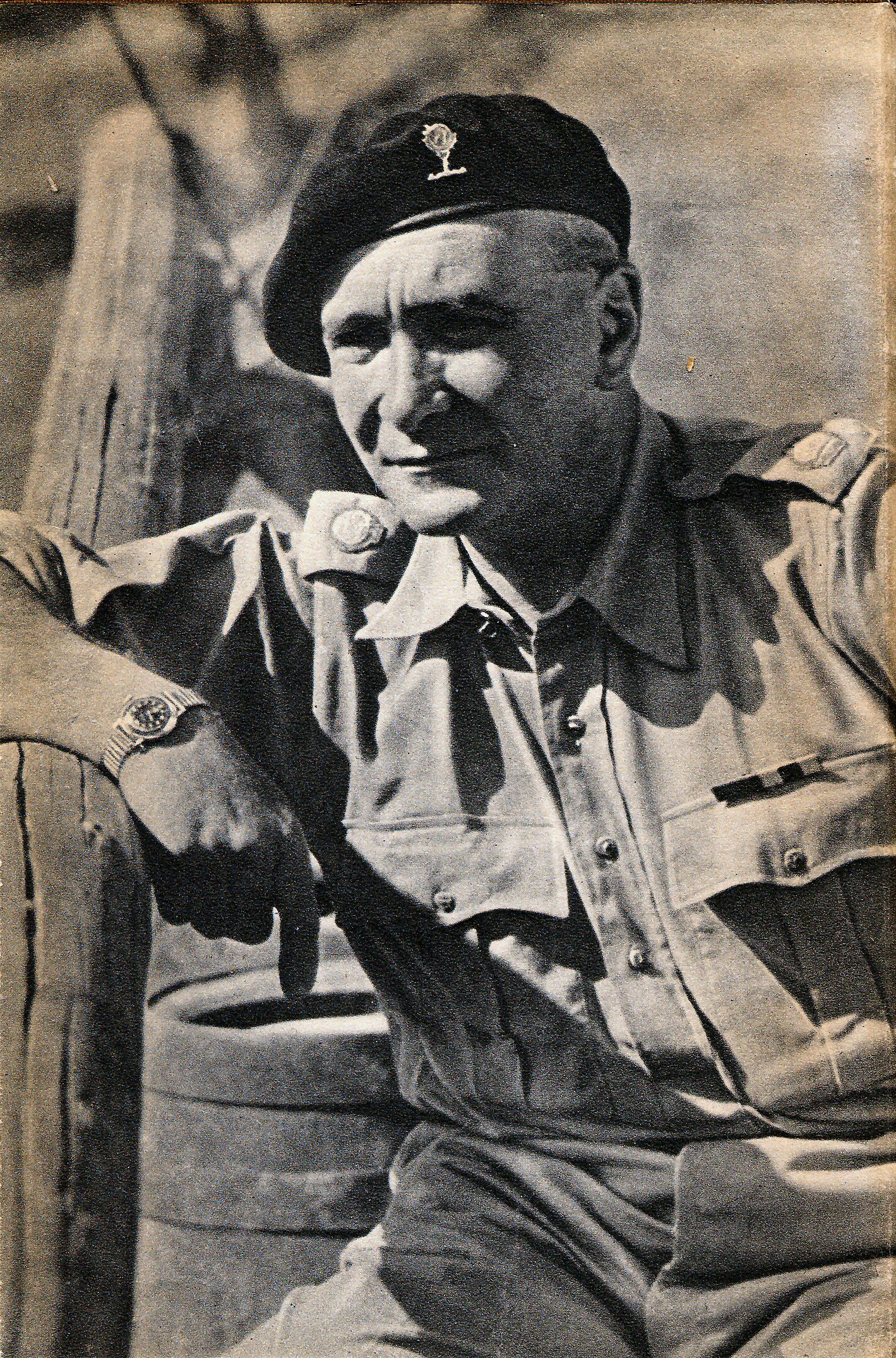
Early life
Peniakoff was born on 30 March 1897 at Huy, in the Belgian province of Liège, to a well-off family of Russian-Jewish émigrés. At 15 he began studying engineering at the Free University of Brussels, until the German invasion of Belgium in August 1914 ended his studies there.
His father took him to England, where he went up to St John’s College, Cambridge, to read mathematics. He was at first a conscientious objector, but changed his mind by his fourth term. He left Cambridge without a degree and volunteered as a gunner in the French artillery. He was wounded, and after the Armistice he spent about a year in hospital.
Much of his early life is known only from John Willett’s 1954 biography. It is often said that he read engineering at Trinity College, Cambridge; the college was St John’s, and the subject was mathematics. He was born in Huy, not Brussels.
Egypt
In 1924 Peniakoff moved to Egypt as an engineer with a large French-owned sugar company, and spent the next fifteen years in its posts in Cairo and Upper Egypt. In his spare time he explored the Western Desert in a Model A Ford, learning to navigate it, and he also learned to sail and fly. He became a Fellow of the Royal Geographical Society and spoke six languages: English, French, Russian, Italian, German and Arabic.
In 1928 he married Josèphe “Josette” Ceysens. They had two daughters, Olga and Anne, and later divorced.
His employer is often named as the “Egyptian Sugar Company”. No source confirms that name; the sources say only that it was a large French-owned company.
Those desert years mattered. When war came, they gave him a knowledge of the country, its languages and its people that few British officers had, and it shaped everything PPA later did.
The war
When war broke out, Peniakoff was rejected by both the RAF and the Royal Navy. He was finally commissioned into the British Army’s General List in October 1940, aged 42, probably its oldest second lieutenant.
4th Oct. 1940: — Vladimir Peniakoff (159661).
He was posted to the Libyan Arab Force, and in 1942 given command of its small commando, which he led behind the lines in the Jebel Akhdar. That work won him the Military Cross. After the Barce raid in September 1942, where he lost a finger, he raised the unit that became Popski’s Private Army, and commanded it until it was disbanded in 1945.
The nickname
“Popski” came from two directions at once. British signallers could not manage “Peniakoff” over the wireless, and “Popski” was already a familiar name: the scheming villain of the Daily Mirror cartoon strip Pip, Squeak and Wilfred. Who first used it is not recorded. The full story of the name →
The story that “Popski” was a Morse-code shortening of Peniakoff has no source.
Two wounds
| Date | Where | Wound | Status |
|---|---|---|---|
| 13/14 Sep 1942 | Barce, Libya | One finger of the left hand, amputated in the desert the next day | Verified |
| 9 Dec 1944 | North of Ravenna, Italy | The whole left hand, to a German rifle grenade | Verified |
After the second wound he was sent back to England. He returned to PPA in April 1945 with a hook in place of his left hand, and led the unit through its last battles to Venice and Austria. His Distinguished Service Order, for the fighting around Ravenna, was gazetted in April 1945.
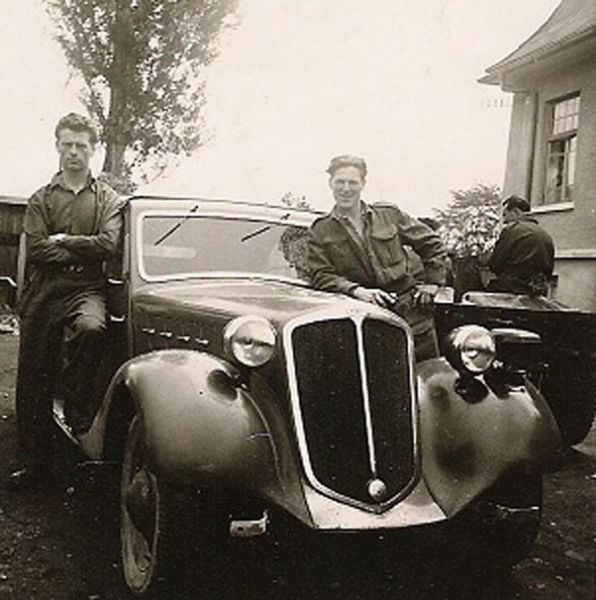
After the war
After PPA was disbanded, Peniakoff served as a British liaison officer with the Soviet forces in Vienna. He became a naturalised British subject in December 1946, and in 1948 married Pamela Firth, a former ATS officer.
His memoir, Private Army, was published by Jonathan Cape in 1950 and in the US as Popski’s Private Army. It was reprinted many times and translated into seven languages. The second edition, in 1951, carried a foreword by John Hackett, the officer who had named the unit. Peniakoff also broadcast for the BBC.
He died of a brain tumour in London on 15 May 1951, aged 54, and is buried in St Leonard’s churchyard at Wixoe, Suffolk.
What we don’t yet know
- The plot number and inscription of his grave at Wixoe.
- The Times obituary, May 1951.
- The exact year of his first divorce: 1941 or 1942.
If you can help with any of these, get in touch.
Sources
- J. Willett, Popski: A Life of Vladimir Peniakoff (MacGibbon & Kee, 1954).
- V. Peniakoff, Private Army (Jonathan Cape, 1950).
- London Gazette, Supplement 35063, p. 682, 31 January 1941.
- MC recommendation, TNA WO 373/46/37; DSO recommendation, TNA WO 373/11/10.