Italy, from Taranto to the Austrian border
PPA spent two years in Italy, longer than anywhere else. It landed at Taranto with a handful of jeeps and finished the war in Austria with about a hundred men in the field, with its own flotilla of landing craft. In between it worked behind the lines, fought beside Italian partisans and held stretches of the front line like any infantry unit.
What did PPA do in Italy?
From September 1943 PPA gathered intelligence ahead of the Eighth Army, raided German supply lines and worked closely with Italian partisans, first in the Marche in summer 1944 and then around Ravenna that winter. In April 1945 it fought through the Comacchio waterways, took the surrender of the German garrison at Chioggia, and drove jeeps into Venice. It ended the war in Carinthia, Austria.
PPA in Italy, 1943–45
- 1Taranto 9 Sep 1943Lands with 1st Airborne Division
- 2Foggia · Lucera Autumn 1943Reconnaissance; HQ at Lucera
- 3Bisceglie 8–17 Jan 1944Loaded for Anzio, then cancelled
- 4Monti del Matese Feb–May 1944Mountain base (Piedimonte d’Alife, now Piedimonte Matese)
- 5Mouth of the Tenna 14–15 Jun 1944Operation Astrolabe landing (near Porto San Giorgio)
- 6Camerino 1 Jul 1944Liberated with the Ferri partisans
- 7Fabriano 13 Jul 1944Enters after the partisans
- 8Ravenna Nov–Dec 1944Porterforce; Boldrini’s brigade
- 9Comacchio 21–26 Apr 1945Seven days in the waterways
- 10Chioggia c. 28 Apr 1945German garrison surrenders
- 11Venice End Apr 1945Jeeps round the Piazza San Marco
- 12Tarvisio Early May 1945News of the end of the war
- 13Rosegg, Carinthia May–Sep 1945Austria; disbandment
By road By sea Cancelled
Approximate route. Modern borders and coastline from Natural Earth (public domain). Map © popskisprivatearmy.com.
Into Italy
PPA reached Italy as part of the 1st Airborne Division. The unit had attached itself to the division at Bizerta in Tunisia, where its jeeps were re-equipped and its men trained in gliders. It landed at Taranto from 9 September 1943. The division’s commander, Maj-Gen G. F. Hopkinson, was killed the next day.
Through the autumn PPA worked ahead of the Allied advance up the east side of the country, alongside the 1st Canadian Infantry Division and a Canadian armoured car regiment. Its best-known coup of this period was a reconnaissance that located the headquarters of the German 1st Parachute Division near Foggia. That intelligence persuaded GHQ to authorise a larger unit: an establishment of 80 all ranks by December 1943.
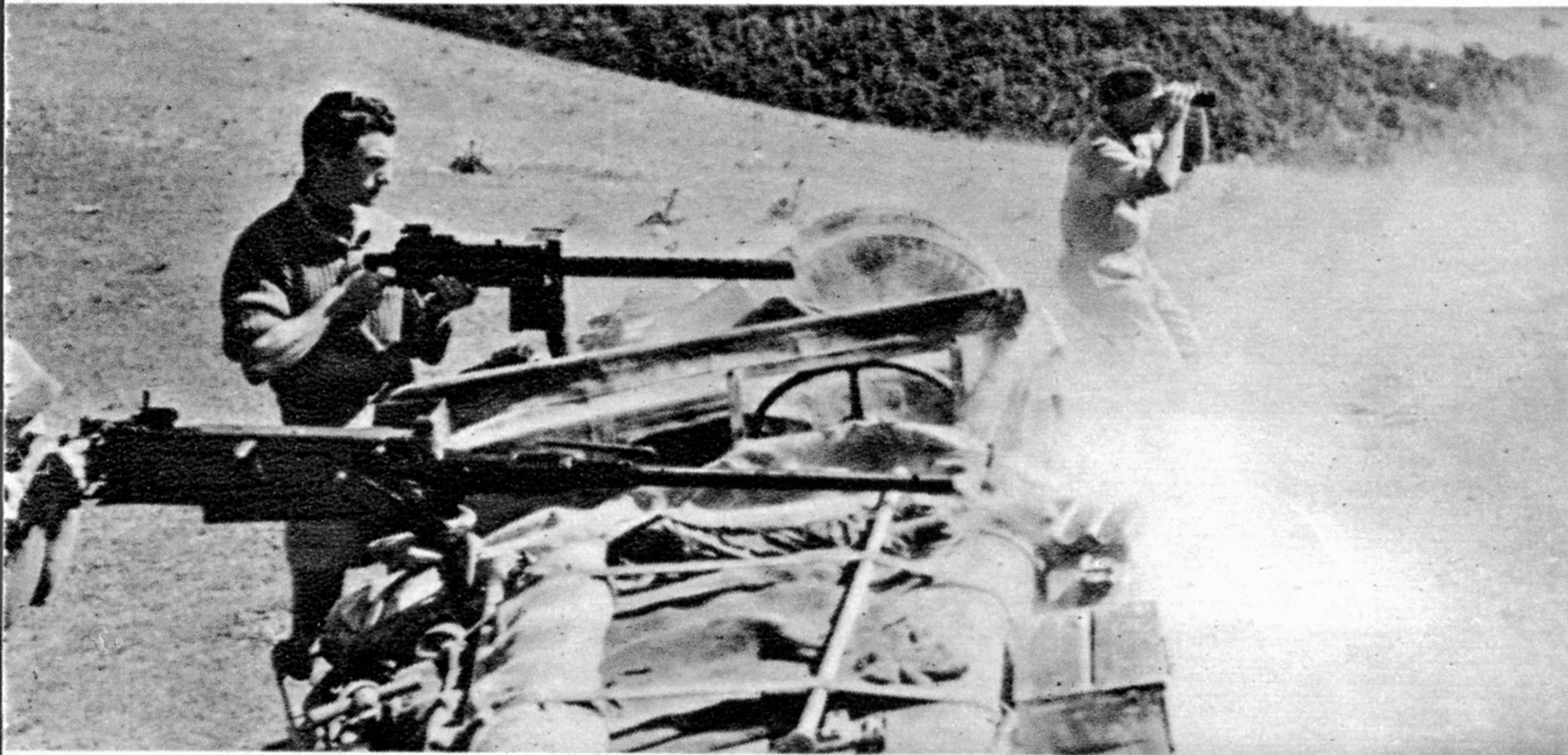
How the patrols were organised
In Italy PPA fought as three fighting patrols of six jeeps each, plus a small tactical headquarters of four jeeps. Each jeep carried a .50 and a .30 Browning machine gun. The patrol letters changed over time: at various points the patrols were known as A, B, P, R, S, HQ and “Blitz”.
Patrol strength is given as 18, 16 or about 15 men in different sources. Claims that PPA fought at Termoli or in the Sangro battles have not been confirmed; the memoir mentions the Sangro only in passing.
The Anzio landing that didn’t happen
PPA was chosen to land at Anzio in January 1944. Peniakoff planned to drive the jeeps straight off the beach and make for the Alban Hills, which he had already scouted and found undefended. The patrols were loaded at Bisceglie on 8 January. On the 17th, a signal cancelled their part in the operation, and the invasion force sailed without them.
Loading and cancellation dates from Peniakoff, Private Army (1950), p. 418. PPA did not serve at Anzio.
The partisan year
Over the winter PPA set up a mountain base in the Monti del Matese, at about 3,000 feet, reached by goat track or a hydro-electric funicular. Alpini instructors taught skiing there in March 1944, and the men trained in rock-climbing.
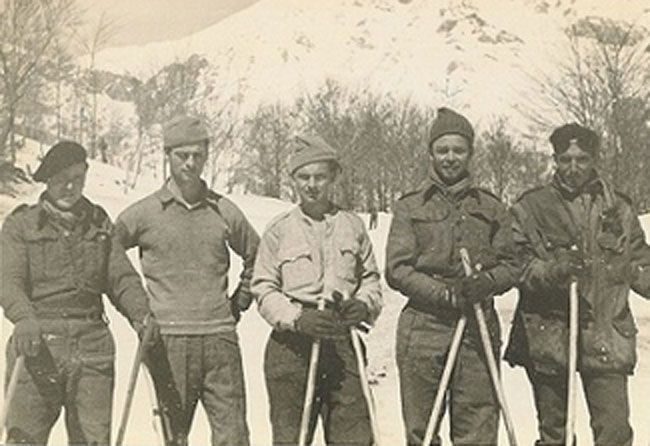
Operation Astrolabe, June 1944
Named after the unit’s cap badge, Astrolabe was a seaborne landing about 60 miles behind the lines, at the mouth of the Tenna in the Marche. About 50 men from three patrols sailed with 12 jeeps in a landing craft on 14–15 June. Capt Bob Yunnie’s advance party got ashore, but the Eighth Army had already broken through and the roads were jammed with retreating Germans, so Peniakoff called off the main landing. The landing craft then ran aground and had to be abandoned, with all the jeeps and stores. Yunnie’s party stayed ashore, reporting and marking targets for air attack until the Eighth Army caught up.
With the partisans in the Marche
Through June and July PPA raided with Italian partisan bands in the Marche and Umbria. At Bolognola it crossed 4,000-foot mountains with about 300 partisans. On 1 July 1944, working with the band led by the Ferri brothers, it helped liberate Camerino, where Giuseppe Ferri was installed as civilian governor. At Fabriano, on 13 July, the partisans had already taken the town at dawn before PPA drove in.
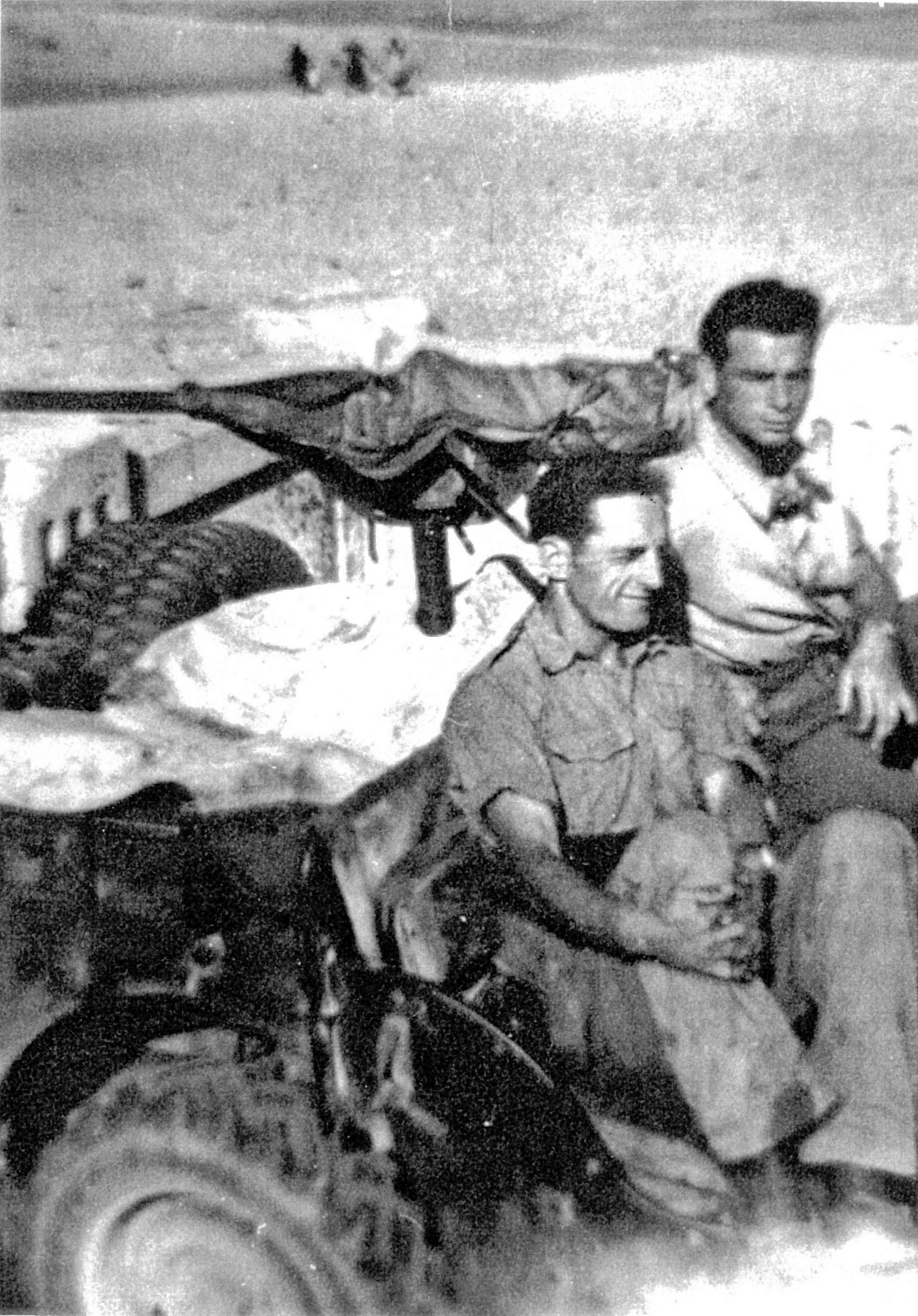
In the summer of 1944, with Allied troops withdrawn for the landings in France, PPA was also used to hold sections of the front line, in support of British, Indian, Polish and Canadian formations. Neither the LRDG nor the SAS was ever used this way.
Camerino, 1 July 1944, is confirmed by Italian partisan-association records independent of the memoir. Peniakoff’s own index has no entry for Camerino.
Porterforce and Ravenna
By late October 1944 PPA had taken on amphibious DUKWs and moved to the Adriatic coast south of Ravenna, a flat country of canals, pine woods and flooded marsh. It came under Porterforce, a mixed force of about 2,000 men commanded by Lt-Col Andrew Horsbrugh-Porter of the 27th Lancers, with Canadian cavalry, artillery and engineers. In practice, Peniakoff wrote, PPA were “our own masters”.
This is the best-documented period in the unit’s history, because Peniakoff’s DSO recommendation survives. It records three patrols clearing the enemy from the sector in the first fortnight of November and taking 31 prisoners, a DUKW assault patrol he led himself, and a bridge built over the Ghiaia canal under machine-gun fire that made possible a joint raid with the 27th Lancers.
… his personality has so impressed itself upon the Partisans in the coastal sector that their activities under his guidance have proved quite exceptional.
Boldrini and the 28th Garibaldi Brigade
At Ravenna PPA worked with the communist 28ª Brigata Garibaldi “Mario Gordini” as equals, under a joint plan. Its commander, Arrigo Boldrini, known as “Bulow”, came to meet Peniakoff by fishing boat at Cervia in late November, and the two agreed a plan and radio links. In mid-November a PPA patrol went into Sant’Apollinare in Classe at night, dressed to pass as Germans. Ravenna was liberated in early December.
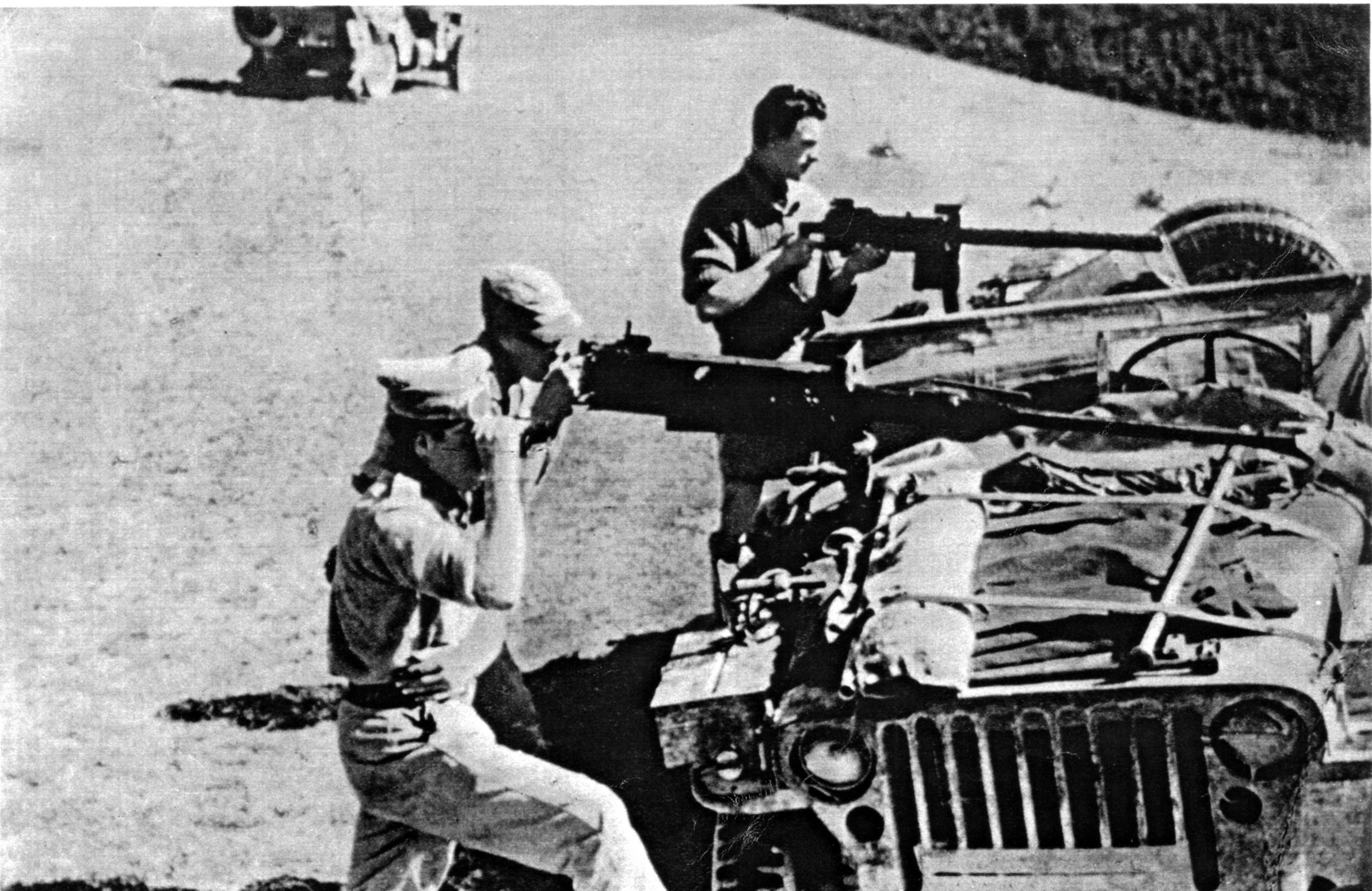
On 9 December 1944, north of Ravenna, Peniakoff led a patrol to within 30 yards of two German companies and was hit by a rifle grenade. He lost his left hand. Capt Jean Caneri commanded PPA until Peniakoff came back in April 1945, wearing a hook.
Comacchio to Austria
The final Allied offensive opened on 21 April 1945. PPA spent seven days fighting in the waterways around Lake Comacchio with the 27th Lancers and the 28th Garibaldi Brigade. It was the unit’s last sustained battle. Lt I. W. McCallum and his gunner, Spr R. MacDowall, were killed when their jeep was ambushed entering a village.
On 26 April Caneri loaded the jeeps onto six ramped landing craft and sailed north up the coast. This small flotilla, commanded by Lt E. Thomas RASC, became known as “Popski’s Private Navy”. On 27 April PPA crossed the Po, the Adige and the Brenta in a single day.
Chioggia and Venice
At Chioggia, Lt Steve Wallbridge went in under a flag of truce and talked the German garrison of 700 men into an unconditional surrender, with all their guns intact. Days later, five PPA jeeps were unloaded from the landing craft in the middle of Venice, and Peniakoff drove them seven times round the Piazza San Marco. In the last ten days of the war PPA took 1,335 prisoners and 16 field guns.
The drive round St Mark’s Square is real and confirmed by the Royal Engineers officer whose craft carried the jeeps (IWM sound recording 14884). The popular claim that they were the only wheeled vehicles ever to enter the square is not supported. See Myths →
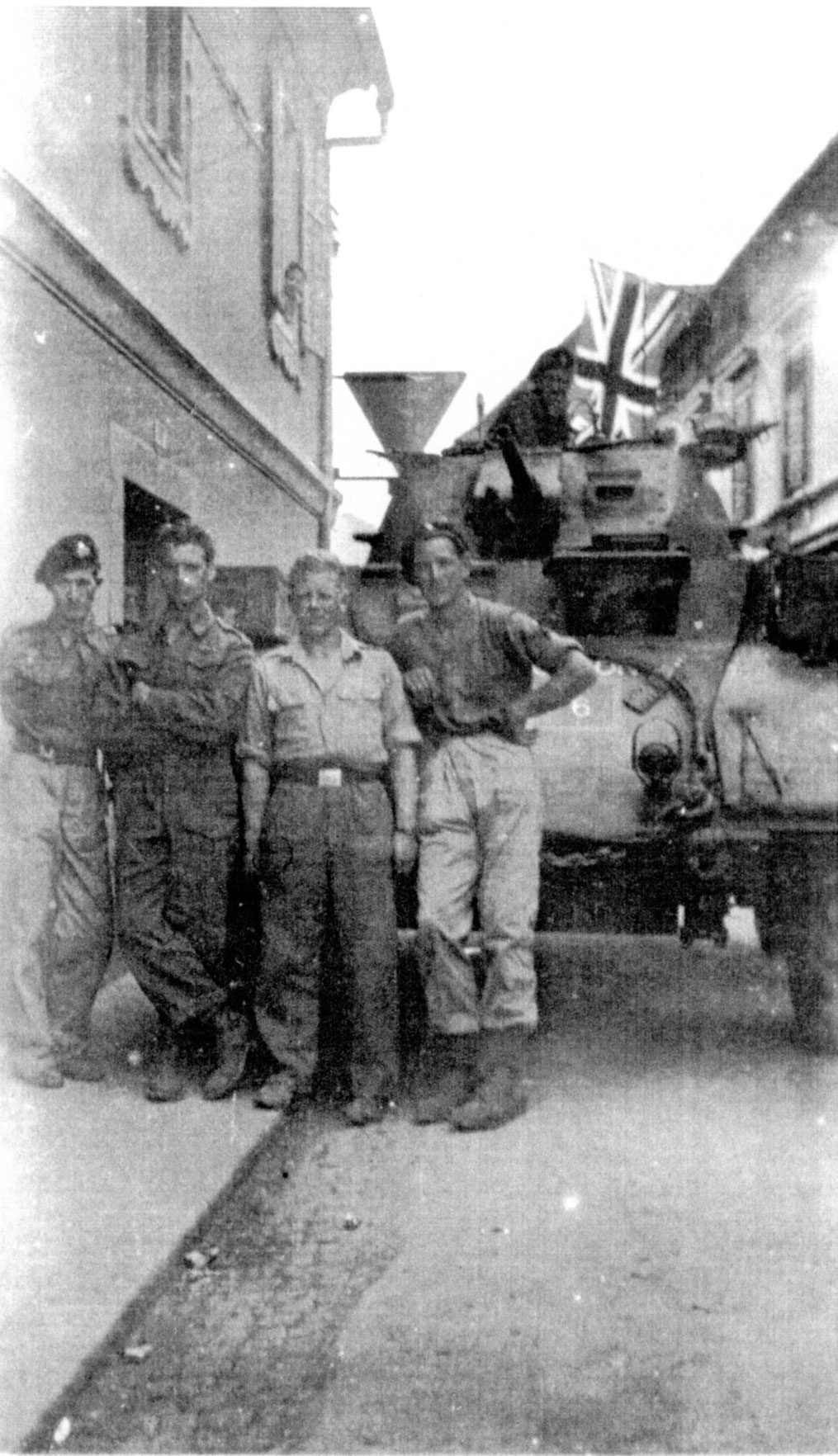
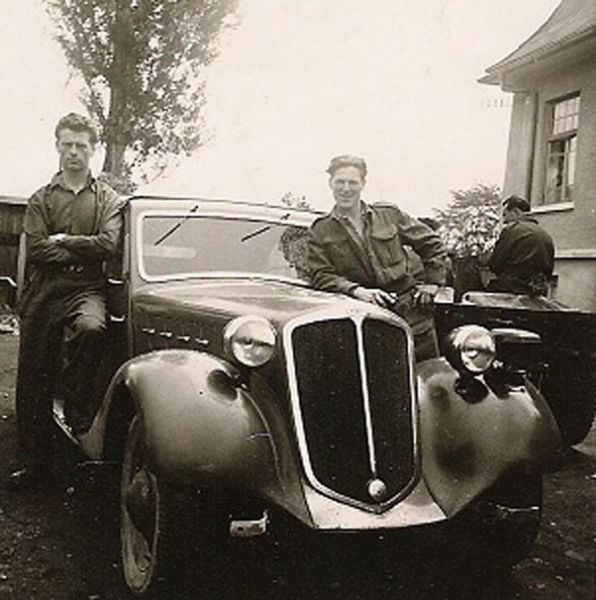
The end in Austria
News that the war was over reached PPA in an Alpine valley below Tarvisio, and the unit drove on into Carinthia. There it met Soviet troops and dealt with the end of the partisan war, including the disarming of partisan bands. A parade was held at Rosegg, and the unit was formally disbanded on 14 September 1945.
The Rosegg parade is photographed and dated May 1945, four months before the formal disbandment date. Rosegg as the place of disbandment rests on a single source.
Italy at a glance
| Date | Place | Event | Status |
|---|---|---|---|
| 9 Sep 1943 | Taranto | PPA lands with 1st Airborne Division | Verified |
| Dec 1943 | Lucera | Establishment raised to 80 all ranks | Verified |
| 8–17 Jan 1944 | Bisceglie | Loaded for Anzio, then cancelled | Verified |
| Feb–May 1944 | Monti del Matese | Mountain base and ski training | Verified |
| 14–15 Jun 1944 | Mouth of the Tenna | Operation Astrolabe | Verified |
| 1 Jul 1944 | Camerino | Liberated with the Ferri partisans | Verified |
| 13 Jul 1944 | Fabriano | PPA enters after partisans take the town | Verified |
| Nov 1944 | Ravenna sector | Porterforce; joint plan with Boldrini | Verified |
| 9 Dec 1944 | North of Ravenna | Peniakoff wounded; Caneri takes command | Verified |
| 21 Apr 1945 | Valli di Comacchio | Seven days’ fighting in the waterways | Verified |
| 27 Apr 1945 | Po, Adige, Brenta | Three rivers crossed in a day | Verified |
| c. 28 Apr 1945 | Chioggia | German garrison of 700 surrenders | Verified |
| 14 Sep 1945 | Austria | PPA disbanded | Needs verification |
What we don’t yet know
- Whether PPA took part at Termoli, as some accounts say.
- Which Inland Water Transport company carried PPA north in April 1945: 945 or 947.
- Where and when exactly the unit was disbanded.
- Whether any memorial to PPA exists in Italy.
If you can help with any of these, get in touch.
Sources
- V. Peniakoff, Private Army (Jonathan Cape, 1950), pp. 366–500.
- DSO recommendation, Maj V. Peniakoff. The National Archives, WO 373/11/10.
- R. P. Yunnie, Warriors on Wheels (Hutchinson, 1959).
- IWM sound recording 14884, Brian Ewart Thomas, Royal Engineers (1995).
- Italian partisan-association records for Camerino and Fabriano, 1944.